



When you think of Nevada, the first image that comes to mind is likely the sun-drenched Mojave Desert or the neon lights of Las Vegas shimmering in the heat. However, seasoned locals know that the Silver State has a split personality when the seasons change, bringing heavy snow to Reno and deceptively slick rain to the south. These shifting conditions lead to a significant spike in winter car accidents in Nevada, creating dangerous scenarios that many drivers are ill-prepared to handle.
For accident victims, the physical pain of a crash is often followed by a confusing legal battle where insurance adjusters try to pin the blame on Mother Nature. This is where experience becomes your most valuable asset.
Key Takeaways
- Driver Liability: Drivers are liable for winter accidents in Nevada if they fail to adjust their speed to hazardous conditions, such as black ice, as the “Basic Rule” mandates driving safely regardless of the posted limit.
- Regional Hazards: Northern Nevada faces severe snow/ice and mountain passes, while Southern Nevada (Las Vegas) primarily deals with slick road film from oil/grease during rain, with rare freezes posing a surprise risk.
- Icy Roads & Black Ice: Black ice is a significant, hard-to-detect hazard, especially on bridges and overpasses, necessitating proactive caution when temperatures approach freezing.
Statistics on Winter Car Accidents in Nevada
To understand why vigilance is necessary, we must look at the data. Winter driving is a statistically significant threat to public safety across the state.
Overview of Accident Rates During Cold Months
Data from the Federal Highway Administration (FHWA) indicates that over 1,235,000 weather-related crashes occur annually across the United States. These incidents result in nearly 5,000 deaths and over 418,000 injuries.
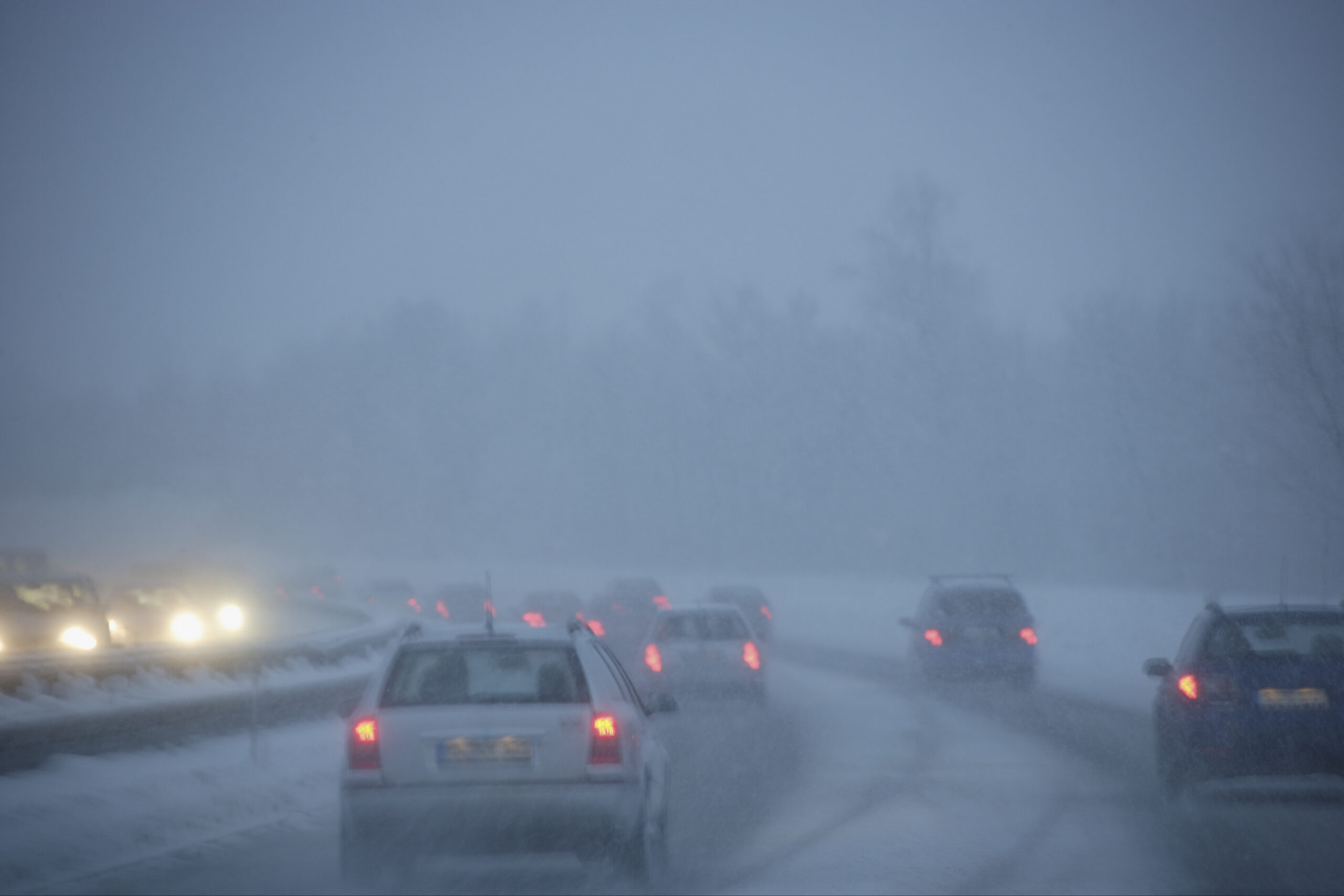
Cars on a wet road during cold weather conditions
The Nevada Department of Transportation (NDOT) reports consistent spikes in collision data during winter events. In Las Vegas, accident rates can double during the first significant rainfall of the season due to the oil buildup. In the north, data shows a correlation between heavy snowfall days and multi-vehicle pileups on Interstate 80. The “first rain” phenomenon in the south is particularly deadly, often leading to a flurry of collisions within hours of the storm’s onset.
Nevada’s winter car accidents are often complex multi-vehicle chain reactions caused by ice. While insurers invoke “Sudden Emergency” or “Act of God” defenses, an experienced attorney can argue that foreseeable freezing conditions negate the claim of an unexpected hazard.
Key coverages include:
- Collision: Covers damage to your vehicle, regardless of fault (e.g., hitting a guardrail on ice).
- Liability: Pays for the other driver’s damages if you are at fault.
- UM/UIM: Uninsured/Underinsured Motorist is vital in winter. It covers your medical bills if an at-fault driver who slides into you lacks sufficient insurance. A robust UM/UIM is recommended due to the high risk of policy limits being exhausted in pileups.
The Legal Reality: “Reasonable Care” vs. The Speed Limit
One of the most important legal concepts to grasp regarding Nevada car safety is the difference between the posted speed limit and the safe speed limit.
Negligence Per Se and The Basic Speed Rule
Under Nevada Revised Statutes (NRS) 484B.603, known as the “Basic Speed Rule”, it is illegal to drive at a speed that is unreasonable and improper for the current conditions.
This means that if the speed limit on I-15 is 65 mph, but it is pouring rain and visibility is low, driving 65 mph is technically illegal. If you cause an accident while driving the speed limit in unsafe conditions, you can be cited for “driving too fast for conditions” and held 100% liable for the crash. We use this statute frequently to establish negligence.
Liability in Multi-Vehicle Winter Pileups
Winter weather is the leading cause of massive chain-reaction crashes. Determining who pays in these scenarios is a complex legal puzzle requiring immediate investigation.
Multi-car collision liability differs from standard rear-end crashes. In pileups, liability is shared: the initial negligent driver (“The Trigger”) is primarily liable, but those who followed too closely (“The Followers”) share blame. Nevada’s modified comparative negligence rule bars recovery if the claimant is over 50% at fault. An attorney is essential in accident reconstruction, as insurers often seek to assign over 50% of the fault to the claimant.
For safe winter driving in Nevada, drastically reduce speed and increase following distance to 8-10 seconds on wet or snowy roads. Never use cruise control on slick surfaces. If skidding, release the gas, avoid braking, and gently steer in the desired direction.
Recommended Emergency Kits for Winter Travel
Even if you are traveling through rural Nevada, the National Highway Traffic Safety Administration recommends keeping an emergency kit in your vehicle’s trunk:
- Warmth: Blankets, gloves, and hand warmers.
- Visibility: Flares and a flashlight.
- Traction: A bag of sand or kitty litter for tires stuck in snow.
- Tools: Jumper cables and an ice scraper.
Resources and Support After an Accident
If the worst happens, knowing where to turn can make all the difference in your recovery.
Finding Local Legal Help for Winter Accident Claims
Don’t trust a generalist with a specialized claim. You need a firm that understands the specific statutes regarding winter car accidents in Nevada.
At High Stakes Injury Law, we analyze weather reports, road maintenance records, and police citations to build airtight cases.
Never give a recorded statement to the opposing insurer without your attorney; their goal is to weaken your claim. Let your lawyer handle all communication.
Ensuring Your Car Meets Nevada Safety Standards
After an accident, ensuring your vehicle is repaired to pre-loss condition is vital. Nevada law allows you to choose your own repair shop. Additionally, ensure your tires are checked. The Nevada Department of Transportation (NDOT) may require chains or snow tires in certain zones; ensuring compliance is part of your duty of care.
Get Legal Representation Today
Don’t let an adjuster deny your rightful compensation for a winter weather injury. You need a team ready to fight for you.
Scott Poisson, the founder of High Stakes Injury Law, has exclusively represented accident victims since 1993, practicing in Nevada, Arizona, New Mexico, and Florida. We are ready to listen to your story and fight for your recovery. Contact us today for a free consultation.
Nevada Car Safety: The Bottom Line
Winter accidents are legally complex, but you do not have to face them alone. You need an advocate who understands that “bad weather” does not equal “no fault.” We fight to prove negligence, protect your rights against insurance delays, and ensure your vehicle is safe to drive again. Let us handle the legal heavy lifting while you focus on healing.
Winter Car Accidents in Nevada: Frequently Asked Questions
Clients frequently ask us about winter car accidents in Nevada and how the season affects their case.
Can I be found at fault if I slid on black ice?
Yes. Drivers are expected to anticipate black ice when temperatures drop. If you were driving too fast to maintain control, you would likely be found liable for the resulting damage.
Does insurance cover accidents caused by weather?
Generally, yes. Collision coverage pays for damage to your car regardless of fault. Liability coverage pays for damage you cause to others. However, the “Act of God” defense is rarely a valid reason for an insurer to deny a third-party claim.
What if the government failed to plow the road?
Suing a government entity (like NDOT) for failing to plow roads is extremely difficult due to “sovereign immunity.” However, exceptions exist. We can evaluate if the government’s negligence was egregious enough to pursue a claim.
How long do I have to file a claim?
In Nevada, the statute of limitations for personal injury is two years. Do not wait for evidence, like skid marks, to disappear quickly in winter weather.
Is it illegal to drive with snow on my car roof?
While there isn’t a specific statute naming snow, you can be cited for an unsecured load or obstructed visibility if that snow slides onto your windshield or flies off and causes an accident.
About High Stakes Injury Law
High Stakes Injury Law is a premier personal injury firm dedicated to serving the Las Vegas community and beyond. With a focus on aggressive representation and compassionate client care, we handle cases ranging from complex multi-vehicle pileups to slip-and-fall accidents. Our goal is simple: to secure the maximum compensation for our clients so they can focus on healing.